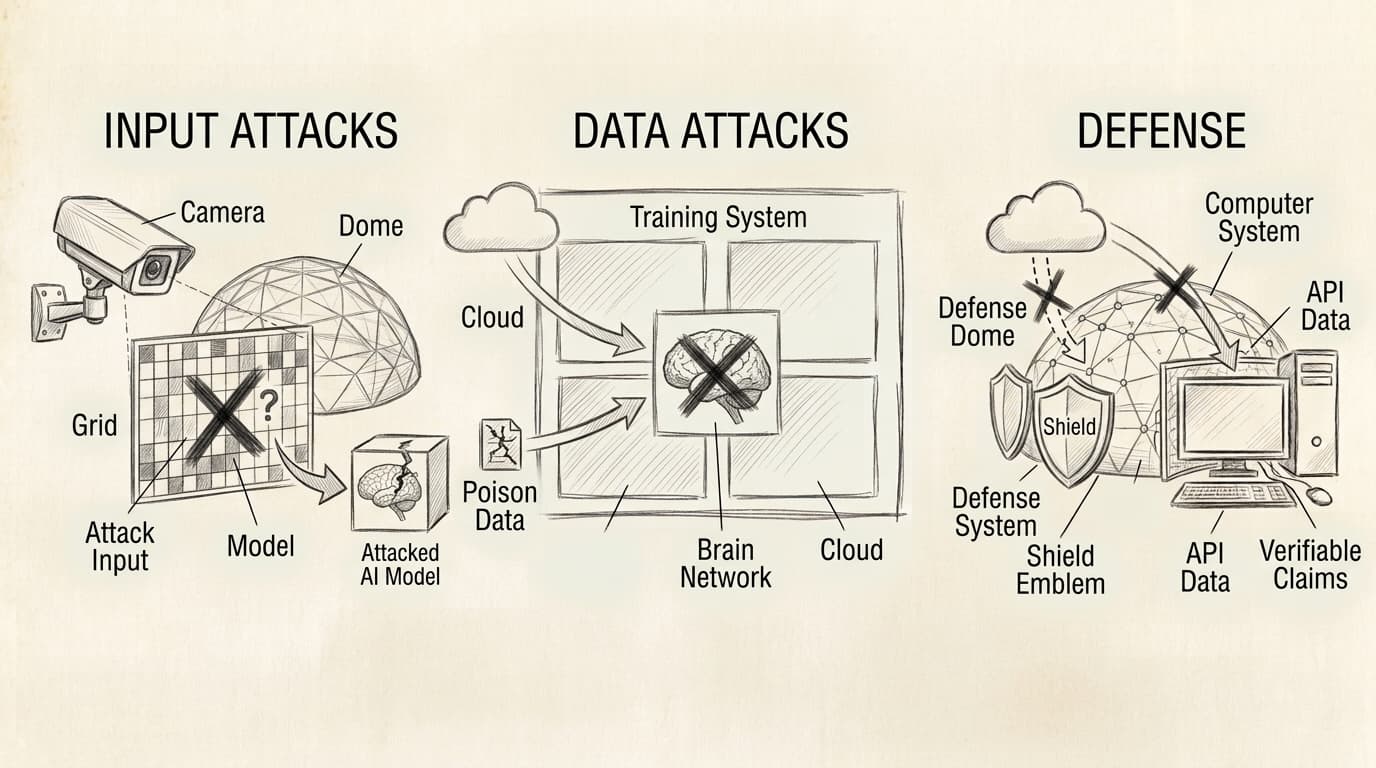
Adversarial AI attacks are among the most consequential developments in cybersecurity because they target the very systems we increasingly trust with critical decisions. In simple terms, an adversarial attack feeds an AI model deceptive inputs designed to force a wrong output, whether a misclassification, data leak or hijacked behavior. The manipulation is often imperceptible to humans, which is why these attacks can slip past both human review and traditional, rule-based defenses.
The threat is well documented. NIST AI 100-2 defines a formal taxonomy distinguishing evasion, poisoning and privacy attacks on predictive AI from poisoning and prompt-injection attacks on generative AI, while MITRE ATLAS maps adversary tactics and the OWASP Top 10 for LLM Applications 2025 catalogs the risks for LLM-based apps.
In this guide I will explain the mechanisms behind adversarial AI attacks, walk through the major types with real-world examples, and lay out proven prevention strategies, from adversarial training and input validation to differential privacy and confidential computing, so you can build AI that resists known and emerging attacks.